Many writers earn their living doing something that isn’t writing. We have jobs that are writing-adjacent or that otherwise make use of our skills and experience. Many of us find our way to academia or to high school classrooms, which offer the prospect of steady pay, healthcare, and summers off to work on our writing projects. As one of those writers who is also a college professor, I know that nearly every one of my colleagues in the English Department’s Program of Writing and Rhetoric at our large public university is also a writer of some variety.
The degree to which one defines one’s self as “writer” or “teacher” varies, of course. Which one am I? I’ve regularly pondered this question since leaving industry for academia five years ago. My first several years as a professor were spent teaching first-year writing, professional writing, and technical writing—subjects that aligned with my professional work history as an editor and production manager but that weren’t quite in line with my MFA in nonfiction writing. An academic year can feel like a creative drain when you are teaching courses that aren’t aligned with your creative practice. This is the reality of many a creative writer. Am I a writer first, or a teacher?
The practical skills that supported my career transition are useful in the classroom, to be sure. I know how to write, and I know good writing. I know how to give constructive feedback and to think holistically about a piece of writing—what are its aims, what does the author want readers to think, do, or believe? How is the author leveraging their identity to reach an audience? Graduate school taught me the language of craft, and I learned to apply craft tools mindfully to my own writing. I brought creative writing craft tools into my first-year writing classroom and helped students see the difference between the five-paragraph academic essays they were used to churning out (complete with an explicit thesis, topic sentences, and a tidy conclusion) and a personal narrative with its descriptive details, balance of exposition and scene, and an ending that leaves questions unanswered. Students in a first-year writing classroom are there because they have to be, and narrative writing challenges them in ways they are not always receptive to; they have been programmed never to use first-person point of view, yet writing about one’s self requires a willingness to be introspective and put one’s self on the page. While I enjoy teaching first-year writing in general, it sometimes feels like my role is limited to pulling students along for 15 weeks and trying to convince them of the merits of a general education writing course. As teaching faculty, would this be the entirety of my new professional life?
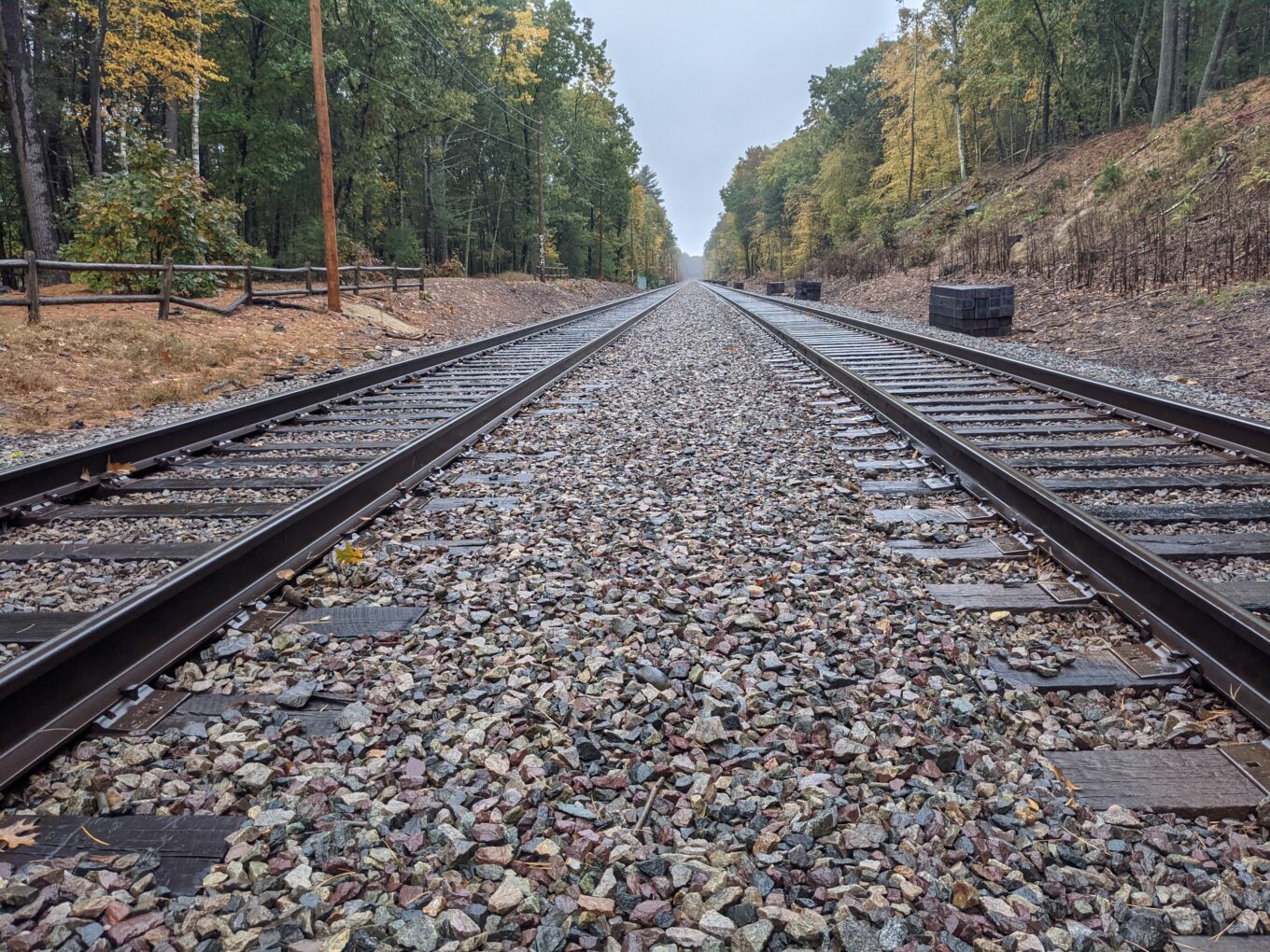
Just as I was beginning to wonder whether I’d actually traded one kind of “job for a paycheck” for another, I was assigned to teach Introduction to Creative Writing, a semester-long offering that touches on the genres of poetry, fiction, and nonfiction. It’s a fast train ride that makes quick stops, with never enough time between stations to truly enjoy the scenery. Just four weeks are devoted to creative nonfiction, hardly enough time to share all my favorite forms—graphic memoir, visual essay, autoethnography, hermit crab, the braided essay, the meditation essay, and fragments. On my teaching schedule, the creative writing class came immediately after two sections of first-year composition, so I used my walk between buildings to set aside rhetoric and MLA and annotated bibliographies and lock in (as the students say) on creativity.
Finally, along came an opportunity to teach the semester-long Introduction to Creative Nonfiction. My heart skipped a beat when I saw my teaching assignments for fall: there it was, on its own day even—my genre! I imagined how it would all play out: I would reside squarely in my creative writer brain on CNF days and be fully present with my students, writing with them and cheering them on throughout their discovery of my favorite genre. This would not be a fast train ride. It would be a luxurious meandering through the wild and innovative landscape of creative nonfiction. Except that’s not exactly as it turned out. In this first experience teaching a semester-long course in my genre, I was the one who was taught.
What surprised me
Level of interest. I imagined that if a student had signed up for an introduction to CNF class, they must be interested in writing CNF or at least in reading it. This wasn’t entirely accurate. Yes, interest got students in the door, but more than a few of my students actually had no idea what CNF was. Perhaps the class fulfilled a general education requirement, or they’d had a hole in their schedule that my class filled. I hadn’t been in academia long enough to understand the machinations of the advising and scheduling arm of a large research university. Sometimes, it’s simply necessity or convenience that brings a student in the door of a creative writing classroom. What an opportunity, then, to spark enthusiasm for my genre. But would every student eagerly engage with the course content?
Creative nonfiction students wonder not only, “Am I a good writer?” but also “Am I a good person?” or “Did I do the right thing?”
Level of experience. Okay, so some had never heard of CNF. But surely they knew what creative writing was and were interested in being creative writers, yes? Wrong again. About a third of the students hadn’t taken any kind of creative writing class, ever. So now I had students who had done a trifecta of introductory courses (creative writing, fiction, poetry) alongside students taking their very first creative writing course. How to speak to both of these audiences? I didn’t discover this disparity until several weeks into the semester, when it felt too late to back-fill knowledge gaps. I made up for it by giving the less-experienced students lots of in-depth, one-on-one instruction, creating a great deal more work for myself than if I had understood and accounted for the disparity of knowledge in my class-wide instruction from the start.
The level-of-experience situation confounded me all semester. I was always asking myself what I needed to cover for the less-experienced writers to understand and to be successful in attempting a particular style/form/approach. I feared that students with more experience would become bored. In hindsight, I should have looked for ways to lean into the more-experienced writers as mentors for the uninitiated; instead, I lectured. Too much.
What students had difficulty with
Trusting the process. Students didn’t always “get” how a prompt or a series of activities could be turned into a draft or even a part of a draft. I constructed prompts carefully and supported students with making connections to the readings and exemplars. However, most students needed pointed guidance to understand how to leverage in-class writing and homework to build solid drafts. I found myself explaining—often—how a free write or in-class exercise might become something more, or be combined with something else to change its course entirely.
Revision. The less-experienced writers still suffered, it seemed to me, from a desire to write an essay that they would then tweak in minor ways and submit in final form. Try as I might to show them the difference between surface-level edits (i.e., proofreading) and true revision, they failed to see writing as a recursive process, one of looping back and pulling through to move an idea forward. They wanted to bang out an essay, workshop it, and get their grade. This may be the curse of any instruction offered in an educational setting that is tied to evaluation, a firm timeline for completion, and a final grade that ends up as part of the academic record.
What I had difficulty with
Giving enough feedback in enough time. The student cap in my CNF classroom was 20; I had 18 who participated all semester. I wanted to give meaningful feedback on drafts while also being supportive and motivational, which, as it turns out, is not a simple task. Students are writing true stories. They are being vulnerable by being creative writers, sharing their work, and on top of that, the work they are sharing is about themselves! There is, in their minds, a layer of potential judgment built into this effort. It’s not only, “Am I a good writer?” but also “Am I a good person?” or “Did I do the right thing?” or “Does anyone care about me and what happened to me?” or “Will this story mean something to the reader?” As an instructor, that’s a lot to hold.
In my first-year composition course, giving feedback also requires tact, of course, but students are often writing about a topic, not about themselves. With CNF, I wanted to acknowledge the vulnerability and humanity in my students’ work, not just the mechanics of implementing the craft tools we’d practiced together. I found that constructing thoughtful feedback that considered both the craft and the writer as a person tied to the story required much more time than I was accustomed to taking. In retrospect, I wish I’d given more instructive feedback on shorter assignments, but I’d built those shorter creative writing practices into the students’ private journals, which I’d vowed not to collect or read. I wanted students to have a space for their invention that felt safe. As a result, I missed opportunities to course-correct students before their drafts were submitted, and it made my feedback on those drafts more critical than it might otherwise have been.
It seemed that every student left with a piece of writing they could be proud of, that pushed their limits as thinkers and writers.
Slowing down. I’d been on the high-speed train too long, and there was so much to see! I had to remind myself daily that there was no way to fit in everything I wanted to share. Even with 15 weeks together, the depths of our exploration would be limited. We touched on many forms, but spent the bulk of our time writing a personal essay and a meditation essay. These major assignments served as a framework to explore the possibilities of structure and the power of constraints.
Successes, aka “small mercies”
Radical experimentation paid off. The major assignment for the second half of the semester was a meditation essay, and I assigned Maggie Nelson’s Bluets and Ross Gay’s Book of Delights as reading for that period. I had never composed a meditation essay myself; this would be as new to me as it would be to the students. I trusted the process, and the work my students produced was tremendous. Through a series of homework assignments that asked students to focus on a singular word or topic of their choosing (some of my favorites: footnotes, obsession, love, running), students generated deeply introspective essays of association. Some students chose to work with fragments that accumulated meaning as the essay progressed. Others were more comfortable sticking with a narrative arc. The results were spectacular. It felt to me that every student, regardless of experience, left the class with a piece of writing they could be proud of, that pushed their limits as thinkers and writers.
Writing as art and public practice. To wrap up the semester, students were asked to make their art public in two ways—by giving a reading and by submitting an essay for publication in a literary magazine. For our public reading, students selected an excerpt either from one of their major assignments or their writing journal and read it aloud during class; they were encouraged to invite friends, professors, and family to join us on that day. It was powerful to see and hear students reading their own work. Their body language and confident voices demonstrated their pride and ownership of their words. As their professor, I was filled with pride, too, for their bravery and hard work.
For the essay submission, students were required to submit one of their essays to at least three literary magazines, journals, or contests. Our university runs an annual creative writing contest, so that was an easy submission for every student. We explored Submittable together and students did independent research to find interesting journals that seemed a match for their writing style. They shared links to what they found and we looked at the websites together in class, with each student leading the discussion for the journal they selected. In the end, two students had work picked up by independent literary magazines, and four students placed in the top tier of the university writing contest. I know the students were uncomfortable with this last requirement of the semester, but it pushed them creatively and made them conscientious about the finishing touches for their essays.
We finished the semester with a flourish rather than the slow fade that can happen after 15 weeks of togetherness. I filled pages in my work journal with ideas of what to do—and what not to do—the next time I have the opportunity to teach a semester-long creative nonfiction course. I did make time to write with the class, and when we shared our work, I shared mine, too. Over the course of our time together, I felt in community with my students, not like a talking head at the front of the room (though admittedly, there were many days at the start of the semester that felt that way). The writer in me is leveraging my experience to produce this essay about teaching creative nonfiction writing. I am a writer first.
—Megan Reilley is a creative nonfiction writer living and working State College, PA. She writes through the lens of motherless daughter as she interrogates societal and personal expectations of female and familial identity, mothering, and the body. Megan is an international board-certified lactation consultant, and before earning her MFA and embarking on a teaching career, she was an editorial and publications professional for more than 20 years. She is co-editor of true.