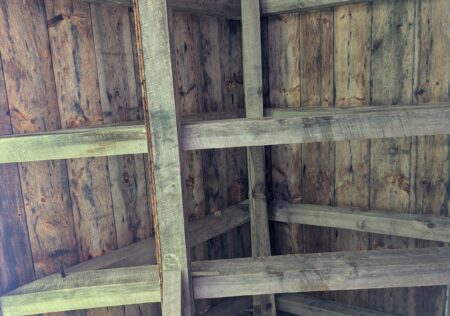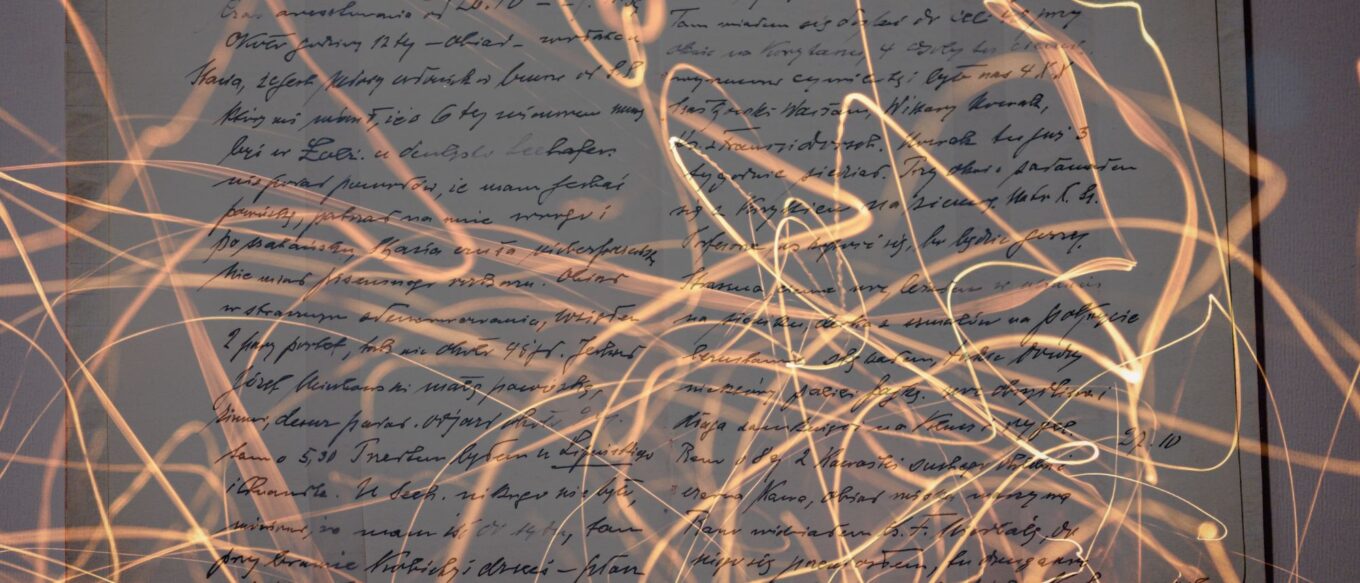
A decade ago, I visited the Angel Island Immigration Station, the California port of entry where, between 1910 and 1940, Chinese immigrants were detained under the 1882 Chinese Exclusion Act. There, I saw vestiges of poems that detainees wrote on the barrack walls, their words faint on the wood, on a prison island shrouded in fog amid the cold waters of the San Francisco Bay. As I delved into this history, I found that in the 1930s, two detainees had copied down many poems and snuck them to shore when they were finally permitted to enter the United States. These poems, together with those documented by San Francisco State College professor George Araki and photographer Mak Takahashi in the 1970s on trips to the abandoned barracks, form the basis of the Angel Island poems that we have on record.
All of the Angel Island poems that we have on record were found in the men’s barracks. For a long time, historians believed that the Chinese women detained on Angel Island did not write any poems. In those days, the reasoning went, poor Chinese families prioritized educating their sons over their daughters; because of onerous immigration policies, most of the Chinese women coming to the United States were wives seeking to reunite with their merchant husbands; these women, they concluded, were illiterate. However, in oral histories conducted with former female detainees, the women said that they saw poems on their barrack walls. They were likely less extensive than the floor-to-ceiling tapestries of verse in the men’s quarters, but some of the women wrote poems. Their words were lost in the fire that burned down the women’s barracks and closed the immigration station in 1940.
In my first book Islanders, I imagine what the women on Angel Island might have said. I drew on a trove of existing historical scholarship, oral histories, anthologies and translations of the men’s poems that have been preserved, as well as my lived knowledge of Chinese beliefs and biases to conjure what the women’s experiences of detention might have been like.
Without speculation, we lose a lot of stories and perspectives.
Speculation is not just about invention. There are fractures in our knowledge of facts and reality, be it our private memories or the historical record. These gaps are often shaped by power dynamics, our collective sense of what is important to record and remember, or what is too shameful to acknowledge even to ourselves. Disasters such as flood and fire can also destroy documents and archives, though, as my Angel Island work shows, these losses are often compounded by unexamined biases and stereotypes. Speculation, in this context, is an informed conjecture about what has been lost. It is not about making things up—if that is your jam, you’re writing fiction, which is a legitimate approach but not the subject of this essay. Rather, I am talking about suppositions rooted in fragments of evidence, aiming to correct the record even though it necessarily falls short.
Before I start speculating, I try to exhaust all avenues of research. Because truth is stranger than stereotype. And when we speculate, it is easy to fall into the convenient narrative.
When I was growing up, the story I heard was that my great-grandfather was a womanizer who abandoned the family for a mistress, which is why my grandmother and her sister, as the oldest of six children, had to migrate from China to Singapore on the cusp of adulthood to find work. And they never got over it.
It is the story of the callous man who puts his pleasures and desires over the well-being of his family. We have all heard this story. With the bits I have told you, I am sure that you’re forming your own mental maps of who he might have been and the arc his life might have taken, even if you did not realize you were doing so until I pointed it out. This is a convenient narrative.
When I interviewed two of my grandmother’s surviving siblings—a sister and a brother, both now in the United States—a more complex truth emerged. To cut an epic soap opera short, my great-grandfather made his fortune working, together with his mistress, for the Japanese during World War II, and after the war, they were both compelled to leave town. In 1949, when the Communists won the civil war, the family fled for Taipei, where their father had settled with his mistress—it was her hometown. He told my great-grandmother that he would set her up, but she would raise their children alone.
In the 1950s, my great-grandfather lost everything when he was arrested for smuggling—at which point, my grandmother and her sister, already in Singapore, had to send half their paychecks home. His mistress, who knew martial arts, beat him up and left him. He became homeless. The third sister, then a university student in Taipei, found their father outside the YMCA one day—he knew he would find her there—and asked him to come home. My great-grandmother was still angry, but she took him back, brought him back to the church, and they became missionaries together.
On top of that, his own father had died in mysterious circumstances when he was twelve, and he had had to quit school to support his mother and sister. The mother who continued to live with her daughter-in-law and grandchildren after he left town with his mistress.
If I had tried to speculate based on what I initially knew, I would never have come close to this story. And it is a much richer portrait of family, culture, and history.
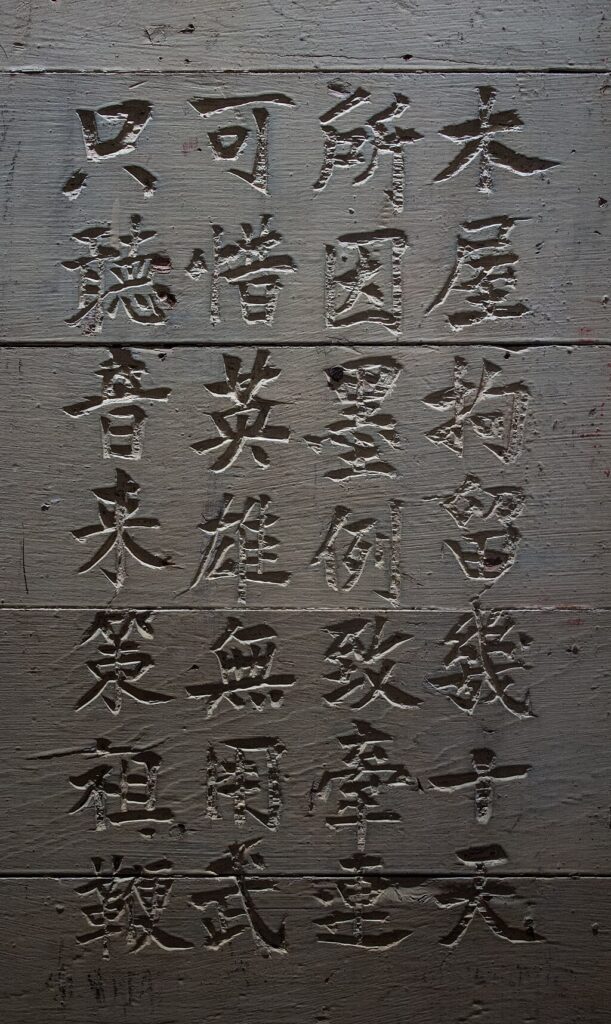
Photo by Rhododendrites is licensed under CC BY-SA 4.0.
In this age of fake news and alternative facts, I believe that it is crucial, if we want to claim the mantle of facts and reality, to root our writing in evidence and strive for accuracy. How this plays out, especially when it comes to private memories and suppressed histories, is more complicated.
My recent book Bitter Creek is about the Rock Springs Massacre in Wyoming. On September 2, 1885, a dispute between two white and two Chinese coal miners over the right to work in a particular room escalated into a city-wide riot, in which at least 28 Chinese were murdered and the rest of them run out of town at gunpoint. The massacre was the culmination of ten years of labor struggle; in 1875, the Union Pacific, which owned the Rock Springs mines, brought in Chinese workers to break a strike. The legendary railroad also failed to turn a profit. In 1884, the US Treasury garnished fifty-five percent of the Union Pacific’s revenues in an effort to capture repayments on the loans it made to build the transcontinental. In response, the Union Pacific cut wages and sparked a spate of wildcat strikes along the road. The white miners in Rock Springs had signed an ironclad agreement not to strike when they returned to work in 1875; as they watched their fellow workers agitate for better conditions, they blamed the Chinese for their inability to act, their impotence.
The Rock Springs Massacre is not a well-known part of the history of the American West, but there are plenty of archival materials available. I have telegrams between the Union Pacific and Wyoming Territory officials. I have Issac Bromley’s investigation report commissioned by the Union Pacific, which includes detailed interviews with the suspected rioters. I have eyewitness accounts from white citizens who condemned the massacre, including a mine foreman who described watching hogs eat the corpses on the street. I have arrest and jail records of the rioters and the court transcripts from their sham trials. I have the Union Pacific’s annual reports from the years leading up to the massacre. But I have not found any first-person accounts, be it diary entries, letters, or sworn testimonies, by the Chinese miners.
In the 1880s, a Chinese person could not give eyewitness testimony against a white person, and even though the rioters went to trial—and were acquitted on the basis of insufficient evidence—law enforcement did not seek the Chinese perspective. Similarly, the personal effects of the Chinese workers have been lost to the ravages of time; they were, after all, an underclass without the stability of home and hearth, without a safe place to accrue wealth both material and intangible. And the rioters, believing the Chinese would return to Rock Springs for their possessions, set fire to Chinatown, killing the Chinese who hid in their cellars. Any letters or diary entries the Chinese kept would have also been lost to the flames.
If I had stayed true to document and evidence, I would have perpetrated the silencing of the Chinese workers. Without speculation, we lose a lot of stories and perspectives. At the same time, we bring our experiences, biases, and perspectives to interpret the world around us. When we speculate, we inevitably distort our memories or the historical record.
In talks and interviews Paisley Rekdal gave around the publication of West: A Translation, a hybrid collection of essays and poems on the transcontinental railroad, she discussed the pitfalls of trying to smooth out the gaps of history. At the heart of West is an Angel Island poem that elegizes a suicide at the detention center; in using this poem as a frame for her investigations into this history, she centers the anonymous Chinese workers who built the most difficult part of the route, the steep climb to the summit of the Sierra during one of the worst winters on record. Like the Chinese miners in Rock Springs, no first-person accounts by the Chinese transcontinental workers have been found, not even by Stanford University’s Chinese Railroad Workers in North America project. To top it off, the Central Pacific did not record their names.
Rekdal draws instead on the few voices that she could find in the archives, including Chinese-English phrasebooks from the 1870s and 1880s, immigration questions at Angel Island, oral histories with Irish workers and Black porters, and speeches made by white demagogues.
“The language of poetry extends from the limitations of fact and document, in essence, completing what the original texts themselves leave blank,” she said in a talk delivered at the AWP conference in 2023. “Rupture and loss might be seen—from a historian’s point of view—as flaws in the record. But for the poet, they offer opportunities to create alternative texts to both poetry and history themselves.” The risk is that “the moral wishes of the present might impose themselves on certain facts of the past. When faced with absence, with an archive that in and of itself only frames certain bodies in racist or dehumanizing language, it might be too tempting to write into absences we find the kinds of redemptive narratives that, for many reasons, did not or could not exist.”
Such presentist histories tend to “assuage the contemporary writer’s personal needs, evading history entirely.”
I am suspicious of the idea of emotional truth.
Now that I am more than ten years away from the writing of Islanders, I can see that if I were writing the book today, it would be a very different book. Not just because I have a better command of craft and technique, but because I am also not the same person as the twenty-something who wrote that book, with different questions and concerns. While I rooted my persona poems in the evidence that I could find, I can now see that the stories, images, and approaches I selected were shaped by the central question of my twenties, which was the devastating need to, as I say in one of the poems, “Why must I prove / that I am me?” I had been raised in an environment where I had to cultivate a false self in order to survive, and as a young adult, I struggled with stripping away the masks. At Angel Island, the women who were coming to join their merchant husbands had to prove their identities to the immigration officers. Because of widespread fraud, the officers interviewed the women and their husbands about the minutiae of their shared private lives. Discrepancies in their accounts were treated as evidence of an invalid relationship, one that was arranged to circumvent immigration laws, and the women would be subject to deportation. I can see now that I wanted to interrogate the stakes of not being believed for who you say you are.
Am I evading history? I don’t think so, though I would leave that judgment to the critics. What I am saying here is, selection is inherent in writing history, for no one book can encompass everything, and where there is absence, these choices are magnified by the author’s proclivities. It is a distortion—and we should be cognizant of it—but again, without such speculation, many of these stories might not be told at all.
My instinct is to begin by figuring out what I know and what I don’t know. I try to find out as much as I can, whether it is a careful scouring of the archives or interviewing people who might have insight into the story. I make notes of the available facts and timelines. I consider the source of the information and weigh its credibility. If the records are inconsistent, I map the various contradictions and possibilities.
I have been researching the story of a Chinese woman who lived in Evanston, Wyoming, at the turn of the twentieth century. Her real name is unknown; the townspeople called her China Mary, which is about as real a name as Calamity Jane. I learned about her when I visited the Chinese Joss House Museum in Evanston as part of my research into the Rock Springs Massacre. In one corner of the replica temple, there was a picture of her as an elderly woman, with one eye drooping. The docent told me she was a sex worker who came to the area with the railroad in 1868. Her husband had died in Park City, Utah, and she returned to her former profession in order to make ends meet. She was a beauty, the toast of her countrymen, and even owned property in Evanston before she lost it all to a gambling habit. And she lived to over a hundred years old.
Not surprisingly, there is very little information about her in the archives, but the information that is available is contradictory. Her death certificate lists her date of death as January 13, 1939, and her age as “about 105 years.” In the 1910 Census, she appears as a 58-year-old mother of four who had been married for twenty years to a gardener from China. In the 1920 Census, she is listed as 67 years old, still married, living in a section house on Union Pacific property headed by a 24-year-old Mexican woman. None of the Chinese men listed as living in that section house have the same name or age range as the husband in the 1910 Census. In 1930, she is listed as a 76-year-old widow, now the head of her own household on First Avenue. The age discrepancies in the census might be due to the differences in birthdays in the lunar and solar calendars, but doing the math, the census would put her at around 86, not 105, at the time of her death.
If she was a married mother of four in 1910, why did the museum contextualize her as a sex worker? The obituary in the Salt Lake Tribune claims that she lived in Evanston for sixty years, which would place her arrival around 1879. According to the Uinta County Museum, she helped the Chinese men who fled the Rock Springs Massacre—the Union Pacific sent trains to rescue the Chinese who fled into the sagebrush hills and brought them to Evanston, the next railroad stop a hundred miles west. But in accounts by the Utah and Wyoming state archives, she lived in Park City in the 1880s and moved to Evanston around 1900 after her husband died. I asked the Park City Museum what records they have, and the archivist told me, “I have not been able to track down where the information came from, but she apparently lived in Park City in the 1880s and ran a China ware shop on Park Avenue.”
Was she in Evanston or Park City during the Rock Springs Massacre? The archives contradict on this point, and both accounts are plausible. She does not appear in the 1880 and 1900 Census in either town, and the 1890 Census population schedules were destroyed in a fire at the Washington, D.C. archive in 1921.
The only facts in her story that I can ascertain with confidence are that she died on January 13, 1939, and that she lived in Evanston from 1910 until her death in 1939.
How can I speculate when I cannot even establish a baseline of facts?
Ana Maria Spagna’s Pushed: Miners, a Merchant, and (Maybe) a Massacre begins with a snippet she finds in a book: In the 1860s, near her home in rural central Washington, a group of Indigenous people murdered as many as three hundred Chinese miners and pushed their bodies over a cliff into the raging Columbia River. Baffled that she had not heard of the Chelan Falls Massacre after decades of living in the area, she sets off on a journey into archival records, interviews historians as well as longtime white and Indigenous residents of the area—there are not many Chinese left to ask—and scouts key locations of the story, including the cliff over which the Chinese were said to have been pushed. What she found points towards multiple plausible stories. A handful or three hundred Chinese men might have been massacred. The perpetrators might have been Indigenous people who resented the Chinese incursions into their homeland or white men dressed up to look Indigenous. Or the story might have been made up by a white journalist trying to add color to local history.
Instead of establishing a definitive truth, Spagna places the three versions of the story side by side and lays out the evidence and speculations behind each of the possibilities. More than that, she interrogates the convenient narratives that undergird these differing stories, the cultural archetypes so ingrained that they seem to be natural and inevitable, if we even notice them. Instead of paving over the gaps in the record for the sake of telling a good—that is, dramatic and coherent—story, she holds space for the discomfort of doubt, observing and describing the subtle mechanisms that created these gaps in the first place. Ultimately, she considers how our cultural fantasy of the American West shapes the construction of truth in this history.
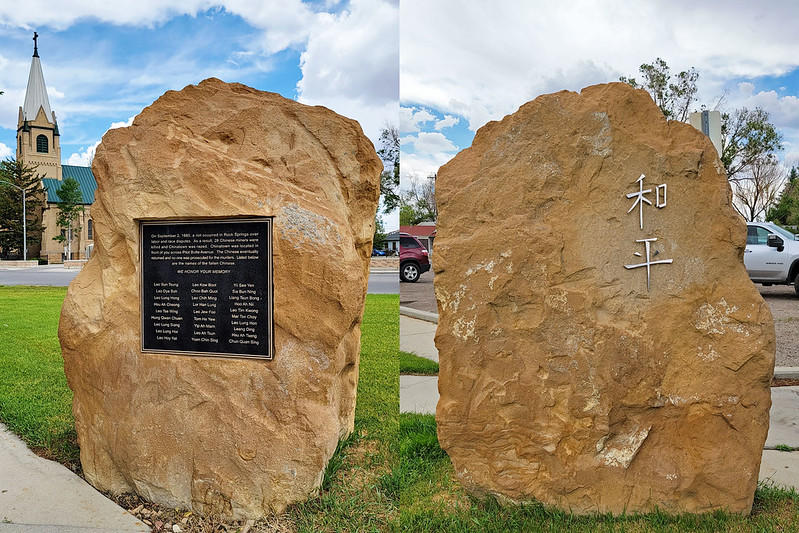
by yiding8 is licensed under CC BY-SA 2.0.
As for China Mary, the approach I am considering is to create personas that inhabit each of the versions that I have found in the archive. If she died at 105 years old, she would have been born around 1834 and likely come to the US in the 1850s, after the California gold rush. Given her age and the situation of the time, there is a good chance she was a sex worker. If she died around 86 years old, she would have been born around 1853. The census records are inconsistent with respect to the year of her immigration, but they are all in the 1860s, at the height of the Chinese sex trade in San Francisco. But she would also have been a child, which means it was more likely she came as a domestic servant, for either a merchant’s wife or a brothel, and sold into marriage or prostitution when she came of age. I would not be able to construct a definitive history for her, but I can use the few data points and conflicting accounts that I can find to create a polyphony of voices that tell the larger story of Chinese women in the Old West.
I am suspicious of the idea of emotional truth. Just because something feels true to us, it does not mean that it is true. When I first encountered China Mary’s story, I took the “fact” that she was an independent sex worker who survived the tribulations of the frontier at face value. Now that I am revisiting my research, I can see that I wanted this story to be true, for it would bolster my rage at the devaluation of women and girls in Chinese culture. It is likely that she was a sex worker at some point, and even if she were not, her life was indelibly shaped by American racism and Chinese patriarchy. I also see that China Mary is a cipher, a hazy screen on which we project our fears and desires, especially around race and female sexuality. She embodies the shadow selves that we are taught to amputate and, as such, her existence elicits strong responses from many of us, be it the white journalists over the decades who sensationalized her story or, well, me.
I know I have to be careful in my sources and interpretations in my speculations of her story. I know I have to be vigilant in avoiding sensationalism and the redemption narrative. Truth is stranger than stereotype, and I have my own biases and blind spots, even and perhaps especially when it comes to my race and culture.
If you’re strongly compelled towards a version of truth, ask yourself why. There is probably a deeper story lurking in there. In fact, it might be the story you’re looking for.
—Teow Lim Goh is the author of three poetry collections: Islanders (2016), Faraway Places (2021), and Bitter Creek (2025). Her essay collection Western Journeys (2022) was a finalist for the 2023 Colorado Book Awards in Creative Nonfiction. [IG @teowlimgoh]
(Adapted from a talk delivered at Regis University’s Mile-High MFA Summer Residency in July 2023.)